Katabatic Winds and the Meltemi Effect in Crete
Understanding the katabatic winds and the Meltemi is essential for anyone planning to paddle or travel along the coast of Crete. These winds can create challenging — and sometimes dangerous — conditions, especially in summer. This article explains how they work, what to expect, and how to plan your sea kayaking trips safely.
What Are Katabatic Winds?
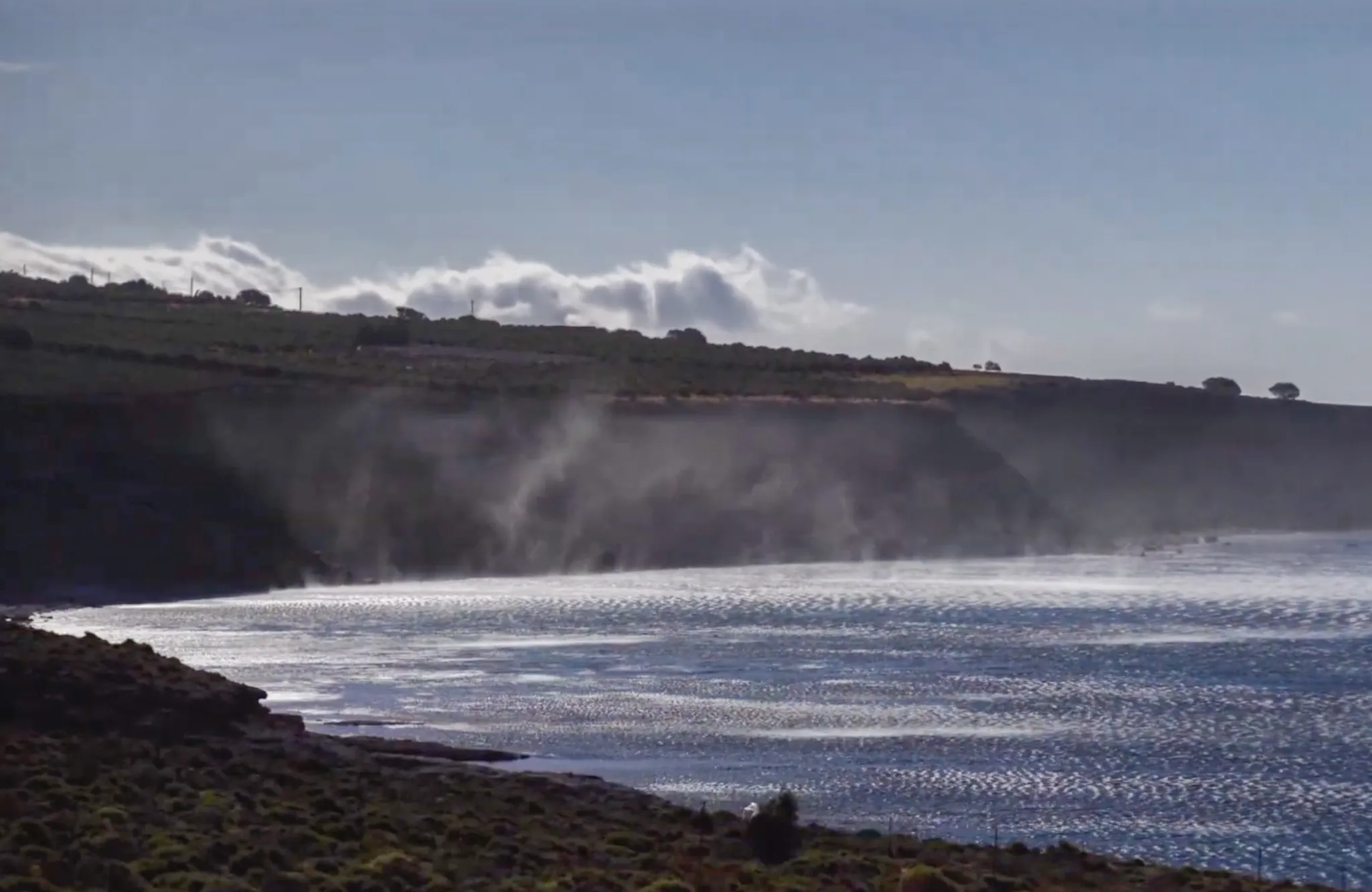
Katabatic winds are local, downslope winds created when cool air from the mountains rushes toward the sea.
In Crete, they occur:
- Mostly along the south coast
- Frequently from June to September
- Often in the afternoon
- Sometimes building from 0 to Force 6+ in minutes
Even on seemingly calm days, katabatic winds can develop extremely quickly — which is why this part of Crete requires experience and caution, especially for rentals.
Why the South Coast is More Affected
Crete’s south coast features:
- Steep mountain terrain rising directly from the sea
- Deep valleys channeling wind
- Cold night air accelerating downslope during warm days
These geographical features can create sudden wind bursts that feel like a switch has been flipped.
Force 8–9 katabatics in Sfakia region
How the Meltemi Works
The Meltemi is a large-scale northern wind system affecting the entire Aegean Sea.
Key characteristics:
- Blows from the N–NW
- Strongest in July and August
- Can remain steady for days
- Creates powerful wind funnels between gorges and coastal mountains
- On the north coast of Crete, it can produce rough, confused seas
The Meltemi is predictable — but the severity depends on local geography.
Combination of Meltemi + Katabatic
This is the most challenging scenario.
When Meltemi winds blow from the north while katabatic winds crash down from the mountains on the south coast, the sea state becomes:
- Chaotic
- Highly unpredictable
- Often dangerous for inexperienced paddlers
This is one of the key reasons we’re strict with kayak rental requirements.
When Are These Winds Strongest?
Katabatic winds
Peak: July–September
Most active: From 11-12 am until late evening
Strongest areas:
- Palaiochora, Sougia, Plakias, Fragokastelo, Preveli, Ligres, Kokkinos Pirgos, Cape Lithino, Diskos, Tsoutsouras and the whole south east part of the island.
Meltemi winds
- Peak: July–August
- Strongest on the north coast
How to Plan Safely
Start very early (6am max). If it is windy in the morning then it will be even worst most of the cases so be aware.
✔ Study detailed forecasts
Use:
- Windy
- Meteo.gr
- Poseidon system
Check wind direction, gusts, and local valleys. When paddling in the south always check what is happening in the north. Force 5-6 north/north west winds guarantee very strong katabatics (gusts above force 6)
✔ Know your limits
If you’re not comfortable with:
- Wind above Force 4-5
- …then do not plan long routes on Crete’s south coast without guidance.
✔ If unsure → join a guided trip
This is the safest option for most paddlers. Browse our day trips or expeditions.
Important Note for Kayak Rentals
To rent a kayak on the south coast, you must:
- Perform a reliable Eskimo roll
- Have open-water experience
- Understand katabatic behavior
- Be able to handle surf landings
Crete is beautiful — but the environment is not forgiving.

